Struggling With Test Anxiety? Here is How to Ace Your New Mexico Road Test on the First Try
- Mesilla Driving Academy
- Oct 26
- 4 min read

Test anxiety affects a significant percentage of driving test candidates in New Mexico. This anxiety manifests through physical symptoms, mental distractions, and performance concerns that can impact test results. Understanding the specific requirements and implementing structured preparation methods will increase your likelihood of passing on the first attempt.
Understanding Test Anxiety Components
Test anxiety during road examinations stems from multiple sources. Unfamiliarity with testing procedures creates uncertainty. Fear of evaluation by the examiner generates stress responses. Concerns about vehicle control under pressure affect performance. Overthinking routine maneuvers leads to mistakes.
The New Mexico Motor Vehicle Division evaluates specific driving competencies during road tests. These include vehicle control, traffic law compliance, hazard recognition, and decision-making abilities. Understanding these evaluation criteria provides a framework for focused preparation.
Pre-Test Preparation Requirements
Documentation Assembly
New Mexico road test candidates must present specific documentation. Required items include:
Valid instructional permit or identification documents
Social Security number verification
Two proofs of New Mexico residency
Vehicle registration and insurance documentation
Candidates between ages 18-24 must provide completion certificates for state-approved driver education courses. All documents must be original, unaltered, and clearly legible.
Vehicle Safety Standards
Test vehicles must meet New Mexico safety requirements. The Motor Vehicle Division will reject tests if vehicles fail safety inspections. Required operational components include:
All exterior lights (headlights, taillights, brake lights, turn signals)
Functional brakes and steering systems
Proper tire condition with adequate tread
Working mirrors and seat belts
Current registration and insurance
No active dashboard warning indicators
Vehicle preparation should occur several days before the scheduled test date to allow time for necessary repairs.
Skill Development Strategies
Essential Maneuvers Practice
New Mexico road tests evaluate specific driving maneuvers. Candidates must demonstrate proficiency in:
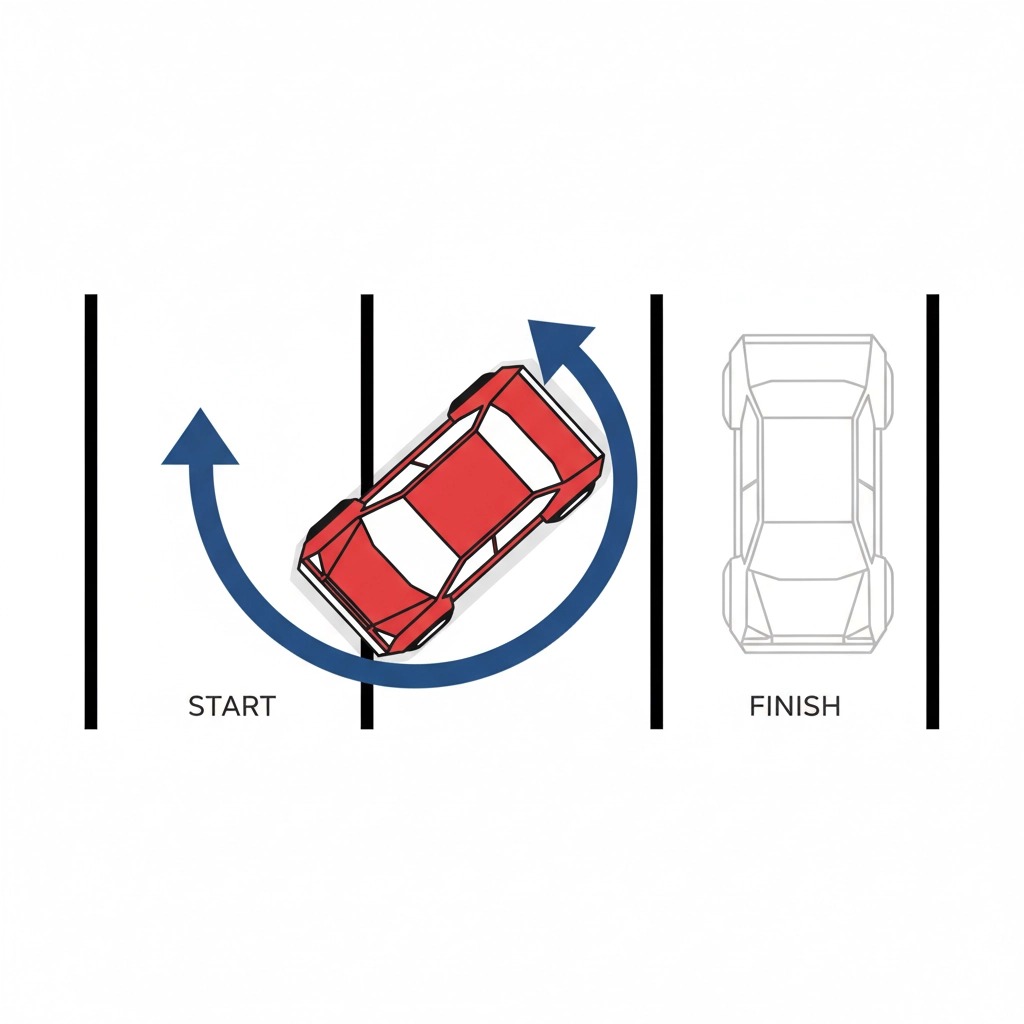
Parking Operations: Practice parallel parking, perpendicular parking, and angle parking in various space sizes. Focus on smooth entry and exit procedures while maintaining proper vehicle positioning.
Backing Maneuvers: Develop skills in straight-line backing for distances up to 50 feet. Practice backing around corners while maintaining proper speed control and observation techniques.
Emergency Stops: Practice controlled stops from 20 mph when instructed. Focus on smooth brake application without wheel locking or vehicle swerving.
Intersection Navigation: Practice right-of-way decisions, proper turning procedures, and traffic signal compliance at various intersection types.
Route Familiarization
Contact your testing location to understand the general testing area boundaries. Drive through these areas during practice sessions to familiarize yourself with road conditions, traffic patterns, and potential testing routes. This preparation reduces environmental uncertainty during the actual test.
Anxiety Management Techniques
Physical Response Control
Implement breathing regulation techniques to manage physical anxiety symptoms. Use slow, controlled breathing patterns during practice sessions to develop automatic responses. Practice progressive muscle relaxation to reduce physical tension before and during the test.
Mental Preparation Methods
Develop positive self-talk patterns to counter negative thoughts. Replace anxiety-producing statements with factual assessments of your preparation level. Focus on demonstrating learned skills rather than achieving perfect performance.
Create mental rehearsal routines where you visualize successful completion of test maneuvers. Practice these visualizations regularly during preparation periods to build confidence and familiarity.
Test Day Procedures
Arrival and Check-in
Arrive at the testing location 15 minutes before your scheduled appointment time. Late arrivals result in test cancellation and rescheduling requirements. Use arrival time to complete final vehicle inspections and document organization.
Present all required documentation to the examiner for verification. The examiner will conduct a preliminary vehicle safety inspection before beginning the driving portion of the test.
Pre-Test Vehicle Inspection
The examiner will request demonstrations of various vehicle systems:
Horn operation
Turn signal functionality
Brake light activation
Hand signal demonstrations
Emergency brake operation
Respond to examiner requests promptly and demonstrate each system clearly. Ask for clarification if any instruction is unclear.
During the Road Test
Follow all examiner instructions precisely. The examiner will provide specific directions for turns, lane changes, and parking maneuvers. Complete each instruction fully before proceeding to the next task.
Maintain consistent speed control appropriate for road conditions. Avoid sudden acceleration or braking unless required for safety purposes. Use proper observation techniques including mirror checks and shoulder observations for lane changes and turns.
Demonstrate proper following distances and maintain awareness of surrounding traffic conditions. Signal all lane changes and turns with appropriate timing.
Common Performance Issues
Speed Control Problems
Maintain speeds appropriate for posted limits and traffic conditions. Avoid driving significantly below speed limits unless conditions require reduced speeds. Practice smooth acceleration and deceleration to demonstrate proper vehicle control.
Observation Deficiencies
Develop consistent observation patterns for all driving maneuvers. Check mirrors regularly during normal driving. Use proper shoulder checks before lane changes and turns. Scan intersections thoroughly before proceeding.
Right-of-Way Confusion
Study New Mexico traffic laws regarding right-of-way situations. Practice identifying right-of-way requirements at four-way stops, uncontrolled intersections, and pedestrian crossings. Apply these rules consistently during the test.

Post-Test Procedures
If you pass the road test, the examiner will provide temporary driving authorization while your permanent license is processed. If you do not pass, the examiner will explain specific areas requiring improvement before retesting.
Failed tests require waiting periods before rescheduling. Use this time to address identified deficiencies through additional practice and possible professional instruction.
Professional Instruction Benefits
Consider professional driving instruction through certified programs like those offered by Mesilla Driving Academy. Professional instructors provide structured skill development and can identify specific areas requiring improvement. Certified instruction programs offer systematic approaches to test preparation that individual practice may not provide.
Final Preparation Steps
Complete a final practice session in your test vehicle 24-48 hours before your scheduled test. Focus on smooth operation of all vehicle controls and systems. Verify all required documentation is assembled and organized.
Get adequate rest the night before your test. Arrive at the testing location with sufficient time for final preparations without rushing. Trust in your preparation level and focus on demonstrating the skills you have developed through practice.
The New Mexico road test evaluates your ability to operate a vehicle safely and legally. Through systematic preparation, proper documentation, and anxiety management techniques, you can successfully demonstrate these competencies on your first attempt. Focus on the procedural aspects of the test rather than potential outcomes to maintain optimal performance levels throughout the examination.
Comments