In-Person vs Correspondence Drivers Ed: Which Is Better For Your Teen in New Mexico?
- Mesilla Driving Academy
- Oct 16
- 4 min read

New Mexico requires all drivers under 18 years of age to complete a state-approved driver education program before obtaining their license. The New Mexico Department of Transportation (NMDOT) provides two primary pathways: in-person instruction and correspondence courses. Each option serves different student needs and circumstances, with specific eligibility requirements and procedural steps that must be followed.
Understanding these distinctions enables parents and teens to select the most appropriate driver education pathway based on individual circumstances, scheduling requirements, and learning preferences.
New Mexico Driver Education Requirements
All teens seeking a New Mexico driver's license must fulfill standardized requirements regardless of their chosen education format. Students must be at least 15 years old to enroll in driver education programs and must complete 50 hours of supervised driving practice, including 10 hours during nighttime conditions.
The graduated licensing system requires teens to hold a learner's permit for a minimum of six months before advancing to provisional license status. Students must be at least 15½ years old to obtain a provisional license, having successfully completed their driver education program and demonstrated competency through required testing procedures.
In-Person Driver Education Programs
In-person driver education represents the NMDOT's preferred instructional method. These programs are delivered through certified instructors at New Mexico high schools or NMDOT-approved commercial driving schools. All driver education schools must maintain licensing through the Traffic Safety Bureau (TSB) to operate legally within the state.
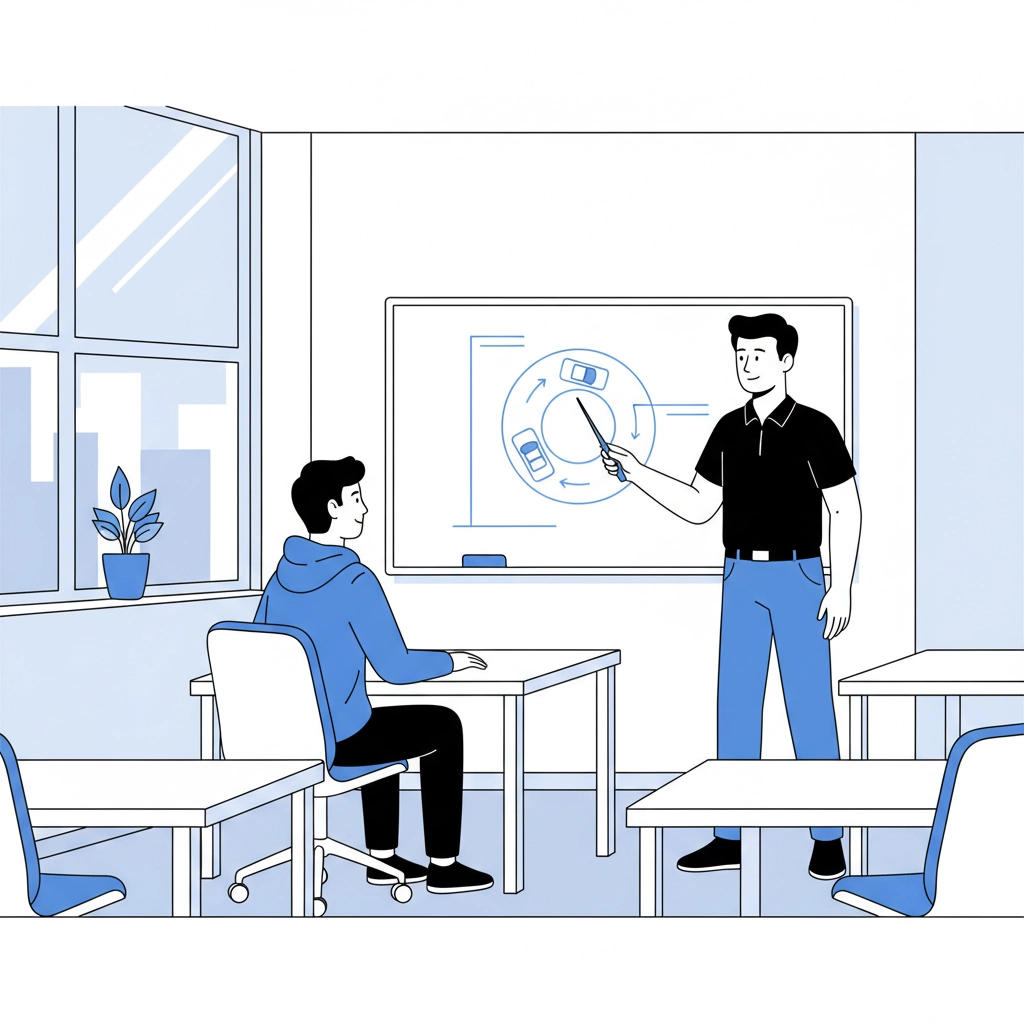
Advantages of In-Person Instruction
In-person programs provide direct access to certified instructors who can address questions immediately and offer real-time feedback during instruction. Students participate in structured classroom environments that promote focused learning and peer interaction through shared educational experiences.
These programs typically coordinate classroom instruction with behind-the-wheel training sessions, creating integrated learning experiences. Students benefit from hands-on guidance during practical driving exercises and receive immediate correction of driving errors or misconceptions.
The enrollment process requires no special applications or approval procedures. Students can register directly through their high school programs or contact approved commercial driving schools to begin instruction.
Considerations for In-Person Programs
In-person instruction operates on fixed schedules that may conflict with students' other academic or extracurricular commitments. Regular attendance is required at specific times and locations, which may present transportation challenges for families residing in remote areas.
Students must coordinate their schedules with established class times, potentially limiting flexibility for those with demanding activity schedules or work obligations.
Correspondence Driver Education Programs
Correspondence driver education serves as an alternative option for students who cannot participate in traditional classroom instruction. These self-paced programs are designed specifically for students experiencing scheduling conflicts or residing in areas with limited access to driving schools.

Eligibility Requirements for Correspondence Courses
The Traffic Safety Center (TSC) evaluates applications for correspondence course eligibility before students may enroll. Homeschooled students automatically qualify for correspondence course options when approved by the TSC.
Students not enrolled in homeschool programs may qualify under "Eligibility Exceptions" when specific circumstances make traditional attendance impossible. These circumstances include scheduling conflicts, transportation limitations, or geographic isolation from approved driving schools.
All applications must be submitted and approved before purchasing or beginning any correspondence course. Students who begin courses without prior TSC approval risk having their coursework deemed invalid for licensing purposes.
Structure of Correspondence Programs
Correspondence courses allow students to complete coursework at their own pace within established timeframes. Students receive instructional materials and assignments that can be completed independently without regular classroom attendance.
These programs maintain the same educational standards as in-person instruction while providing flexibility for completion timing and study location. Students must demonstrate mastery of required topics through testing and assignment submissions.
Limitations of Correspondence Education
Correspondence programs provide limited direct instructor interaction, requiring students to be self-motivated and disciplined in their study approach. Parents may need to provide additional oversight and accountability to ensure consistent progress through coursework.
Students must arrange behind-the-wheel training separately from their correspondence coursework, as these programs focus primarily on classroom education requirements. The 50-hour supervised driving requirement remains unchanged and must be fulfilled independently.
Comparison of Driver Education Options
Factor | In-Person Programs | Correspondence Programs |
Enrollment Process | Direct registration with schools | TSC application required before enrollment |
Scheduling | Fixed class times and dates | Self-paced within program timeframes |
Eligibility | All students under 18 | Homeschooled students and approved exceptions |
Instructor Access | Direct, real-time interaction | Limited, primarily through correspondence |
Learning Environment | Structured classroom setting | Independent study location |
Behind-the-Wheel Training | Often coordinated with coursework | Must be arranged separately |
NMDOT Preference | Highest recommendation | Approved alternative option |
Completion Flexibility | Fixed program duration | Variable completion timeline |

Determining the Appropriate Option
Students should select in-person driver education when they can accommodate regular class attendance and have access to certified driving schools or high school programs. This option provides the most comprehensive instruction and aligns with state preferences for driver education delivery.
In-person programs benefit students who perform better in structured learning environments and value direct interaction with certified instructors. These programs work well for students with predictable schedules who can commit to regular attendance requirements.
Correspondence education becomes appropriate when students meet specific eligibility criteria established by the Traffic Safety Center. Homeschooled students represent the primary target population for these programs, along with students experiencing documented barriers to traditional classroom attendance.
Students considering correspondence courses must demonstrate self-motivation and time management capabilities necessary for independent study completion. Parents should assess their ability to provide oversight and support throughout the correspondence program duration.
Application and Enrollment Procedures
Students pursuing in-person instruction may contact their high school guidance counselors to inquire about available programs or research approved commercial driving schools in their area. Enrollment typically involves completing registration forms and paying required fees directly to the chosen institution.
Those seeking correspondence course approval must submit applications to the Traffic Safety Center before beginning any coursework. Applications should include documentation supporting their need for alternative instruction methods and verification of homeschool enrollment when applicable.
Mesilla Driving Academy offers both in-person classroom instruction and approved correspondence courses to meet diverse student needs throughout New Mexico.
Final Considerations
Both in-person and correspondence driver education programs must meet identical state standards for content coverage and educational outcomes. Students completing either program pathway must fulfill the same supervised driving requirements and testing procedures before advancing to provisional license status.
The choice between programs should be based on individual circumstances, learning preferences, and practical considerations such as scheduling availability and geographic access to approved schools. Students should consult with parents and school counselors to evaluate which option best supports their educational needs and licensing timeline goals.
All driver education programs, regardless of format, serve as preparation for lifelong safe driving practices and responsible vehicle operation throughout New Mexico and beyond.
Comments